lunes, 12 de abril de 2010

Which South American country is helping Cuba to build new houses in areas that were devastated by hurricanes?

Venezuela helped to build new houses in Gibara and Cienfuegos after Hurricane Ike hit the island in 2008:
(via)
"A total of 46 of what are referred to as "petro-casas" or "petro-homes", donated by the Venezuelan government, now house families who lost their homes in Gibara. In their new neighbourhood, named "Pueblo Nuevo" (New Town), the families are now far removed from the dangerous coastline where many of them lived before Ike came through.

Official sources in Venezuela say the houses, based on polyvinyl chloride (PVC) components, are safe for human health. Families moved into a similar neighbourhood, made up of 100 petro-casas, earlier this year in the central Cuban city of Cienfuegos.

Caletones, a small fishing and resort village 20 km from Gibara, will also be relocated a safe distance from the sea. In that area, the storm surge flooded one kilometre inland when Ike hit, leaving only a few solidly-built cabins constructed by government companies standing."
[source]

(via)

lunes, 9 de noviembre de 2009

Which famous Cuban wrote the following verses?

Yo quiero salir del mundo
por la puerta natural:
en un carro de hojas verdes
a morir me han de llevar.
No me pongan en lo oscuro 

a morir como un traidor:
yo soy bueno, y como bueno
moriré de cara al sol.


I wish to leave the world
By its natural door;
In my tomb of green leaves
They are to carry me to die.
Do not put me in the dark
To die like a traitor;
I am good, and like a good thing
I will die with my face to the sun.


lunes, 5 de octubre de 2009

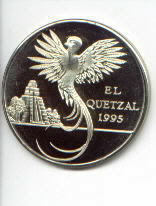
What is the official name of this famous bird from Central America?

The Resplendent Quetzal can be found in areas from southern Mexico to Panama. It is the national bird of Guatemala and is featured on its flag and currency (which is also called the quetzal). The bird has been a symbol of freedom for many centuries because of the difficulty of keeping it alive in captivity. Some quetzals even kill themselves after being put in a cage.
 
The male quetzal usually grows its long tail feathers during mating season, often reaching 3ft. in length. The female is less striking and more subtly colored than the male, however both parents take turns incubating the eggs. Nests are made in holes which the birds carve in the trunks of rotten trees.

To see one of these birds in the wild is a real treat. I was lucky enough to see one outside its nest in Monteverde, Costa Rica the last time I was there in 2002.